
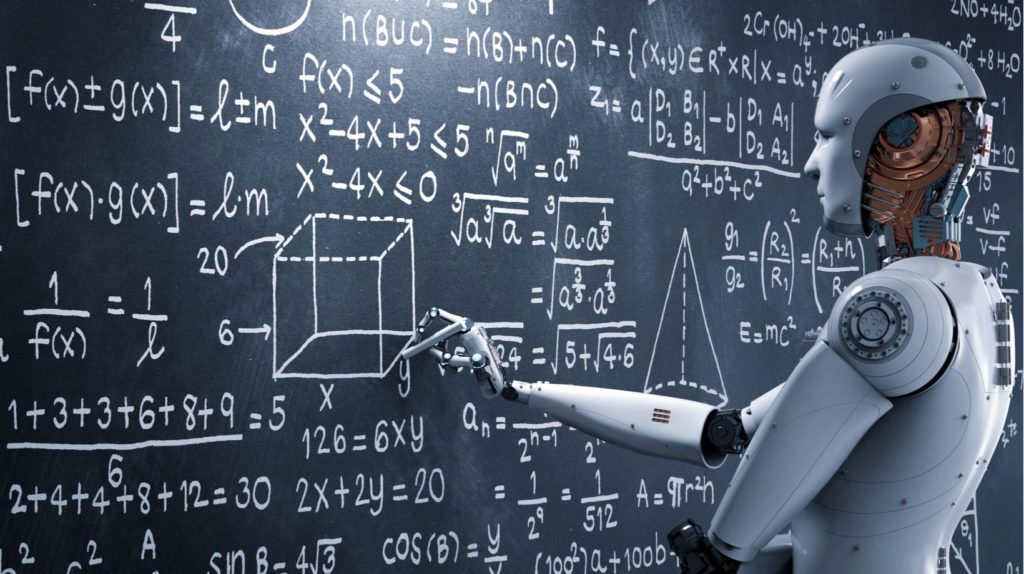
Few technologies in human history have arrived with the speed, scope, and disruptive potential of Artificial Intelligence. In less than a decade, AI has moved from the laboratories of elite research universities into smartphones, hospitals, courtrooms, creative studios — and increasingly, into classrooms at every level of education. From AI tutors that adapt to each student’s learning pace to automated grading systems that free teachers from administrative burden, the intersection of artificial intelligence and education is generating both extraordinary promise and serious questions that society is only beginning to grapple with. Understanding what AI is, how it works, and what it means for the future of learning is no longer optional knowledge for educators, students, and policymakers. It is essential.
Defining Artificial Intelligence
Artificial Intelligence refers to the development of computer systems capable of performing tasks that typically require human intelligence — tasks such as understanding language, recognizing patterns, making decisions, solving problems, and generating creative content. Rather than following rigid, pre-programmed rules, AI systems learn from data: they identify patterns in enormous datasets and use those patterns to make predictions, recommendations, or decisions in new situations.
The field of AI encompasses several distinct but related technologies that are increasingly present in educational settings:
- Machine Learning (ML): Algorithms that improve automatically through experience, without being explicitly programmed for each specific task. ML powers recommendation systems, fraud detection, and predictive analytics.
- Natural Language Processing (NLP): AI that understands, interprets, and generates human language — the technology behind chatbots, automated essay evaluation, language translation, and voice assistants.
- Computer Vision: AI that interprets and analyzes visual information — used in proctoring software, accessibility tools, and educational simulations.
- Generative AI: The most recent and transformative category — systems like large language models (LLMs) that generate original text, images, code, music, and other content based on patterns learned from vast training datasets. Tools like ChatGPT, Claude, Gemini, and Copilot belong to this category.
Together, these technologies are creating AI systems that can converse fluently in natural language, evaluate student work, generate customized learning materials, identify at-risk students, and simulate complex scientific or historical scenarios — capabilities that are reshaping educational practice from the ground up.
Personalized Learning at Unprecedented Scale
One of the most transformative applications of AI in education is personalized learning — the delivery of instructional content, pacing, and assessment that adapts in real time to each individual student’s knowledge, skills, learning style, and progress. Traditional classroom instruction operates on a one-size-fits-all model: the teacher delivers the same lesson, at the same pace, to every student simultaneously. This model inevitably serves some students well and leaves others behind or unchallenged.
AI-powered adaptive learning platforms change this equation fundamentally. Systems like Khan Academy’s Khanmigo, Duolingo’s AI engine, Carnegie Learning, and Knewton continuously assess what each student knows, identify gaps in understanding, and dynamically adjust the difficulty, format, and sequence of content to maximize each learner’s progress. A student who masters a concept quickly is immediately challenged with more advanced material; a student who struggles receives additional explanation, alternative examples, and targeted practice before moving forward.
Research on adaptive learning consistently demonstrates stronger outcomes compared to static instruction, particularly for students who are either significantly ahead of or behind their grade-level peers. For students in large classes where individual teacher attention is limited — the reality for most students worldwide — AI-powered personalization represents a genuine democratization of quality instruction, approximating the benefits of one-on-one tutoring at a fraction of the cost.
AI Tutors and Conversational Learning
The emergence of sophisticated conversational AI — systems capable of engaging in extended, contextually aware dialogue — has created an entirely new category of educational tool: the AI tutor. Unlike static FAQ systems or keyword-based chatbots, modern AI tutors powered by large language models can explain concepts, answer follow-up questions, provide worked examples, offer feedback on student responses, and adapt their explanations based on what the student appears to understand.
Khan Academy’s integration of AI tutoring through its Khanmigo assistant exemplifies this development. Rather than simply providing answers, Khanmigo is designed to use Socratic questioning — responding to student questions with guiding questions that lead students toward their own understanding, rather than creating passive dependence on the AI. This pedagogical design reflects a growing consensus among AI education researchers that the most effective AI tutors do not replace thinking — they scaffold it.
For students in developing countries or rural areas with limited access to qualified teachers in specialized subjects — advanced mathematics, physics, programming, foreign languages — AI tutors represent a potentially revolutionary resource. A student in a remote community who has access to a high-quality AI tutor for mathematics can receive the kind of responsive, patient, individualized instruction that wealthy families pay private tutors to provide, completely free of charge.
Transforming Teacher Practice
A common and understandable anxiety about AI in education is that it threatens to replace teachers. The evidence and the vision of most serious AI education researchers points in a different direction: AI is most powerfully deployed not as a teacher replacement but as a teacher amplifier — handling time-consuming administrative and routine instructional tasks so that human educators can focus on the irreplaceable human dimensions of teaching.
The administrative burden on teachers is enormous. Grading papers, providing written feedback, tracking student progress, preparing differentiated materials for diverse learners, and identifying students who are falling behind all consume enormous amounts of teacher time and energy. AI tools are increasingly capable of handling significant portions of these tasks:
- Automated grading and feedback: AI systems can evaluate multiple-choice and short-answer assessments instantly, and increasingly provide substantive feedback on essay writing — flagging structural weaknesses, identifying unsupported claims, and suggesting improvements.
- Early warning systems: AI analytics platforms monitor patterns in student engagement, assignment completion, and performance to identify students at risk of falling behind or dropping out — alerting teachers before the situation becomes critical.
- Content generation: AI tools can help teachers rapidly generate quiz questions, differentiated reading passages, lesson plan outlines, and rubrics — reducing preparation time and enabling more customization.
- Administrative automation: Attendance tracking, parent communication drafts, progress report generation, and scheduling tasks can be partially automated, returning hours of productive time to teachers each week.
By absorbing routine cognitive labor, AI creates space for teachers to do what they uniquely can: build relationships with students, facilitate discussion and debate, provide emotional support, model intellectual curiosity, and make the nuanced judgments about individual students that no algorithm can replicate.
AI in Assessment and Credentialing
Assessment — how we measure and certify learning — is another domain undergoing AI-driven transformation. Traditional high-stakes examinations are increasingly being supplemented or replaced by continuous, AI-powered assessment models that evaluate student mastery through ongoing performance rather than a single high-pressure test.
AI-based assessment systems can evaluate not just what a student gets right or wrong, but how they approach problems — tracking cognitive processes, identifying systematic misconceptions, and measuring skills like critical thinking and creativity that traditional multiple-choice tests cannot capture. Natural language processing tools are enabling the automated scoring of written work at scale, making essay-based assessment practical in large courses where manual grading of written responses would be prohibitively time-consuming.
In language education, AI assessment has been particularly transformative. Platforms like Duolingo and ELSA Speak use AI to evaluate pronunciation, grammar, and fluency in real time, providing immediate, specific feedback that accelerates language acquisition dramatically compared to traditional classroom instruction. The AI does not tire, does not judge, and is available around the clock — addressing the most fundamental barriers to language practice.
Equity, Access, and the Digital Divide
The potential of AI to democratize education is immense — but so is its potential to deepen existing inequalities if deployed without deliberate attention to equity. Access to high-quality AI educational tools currently correlates strongly with wealth: the schools and students best positioned to benefit from AI tutors, adaptive learning platforms, and AI-assisted teacher tools are predominantly in wealthy, connected, urban environments.
Students in under-resourced schools, rural communities, and developing countries — those who would arguably benefit most from AI’s personalization and tutoring capabilities — face barriers of device access, internet connectivity, digital literacy, and language coverage that limit their ability to access these tools. The risk is a new dimension of the digital divide: an AI literacy gap that compounds existing educational inequalities rather than reducing them.
Addressing this risk requires deliberate policy choices: ensuring that AI educational tools are developed with low-bandwidth environments in mind; prioritizing multilingual AI systems that serve learners in their native languages; funding AI tool access for under-resourced schools; and including educators from diverse global contexts in the design and evaluation of AI educational products.
The Academic Integrity Challenge
No discussion of AI in education is complete without confronting the acute challenge of academic integrity. Generative AI tools — capable of producing fluent, well-structured essays, solving mathematics problems, and writing functional computer code in seconds — have rendered traditional written assignments extraordinarily vulnerable to AI-assisted cheating.
The response from educational institutions has been varied and, in many cases, still evolving. AI detection tools have proliferated, but their accuracy is inconsistent and they produce both false positives (incorrectly flagging human-written work) and false negatives (missing AI-generated content). Blanket bans on AI tools are increasingly difficult to enforce and may be counterproductive, creating a gap between the regulated classroom and the AI-equipped professional world students are preparing to enter.
The most constructive institutional responses have moved beyond enforcement toward redesigning assessment for the AI age. Oral examinations, process-based portfolios, in-class writing, project-based assessments, and assignments that require personal reflection and lived experience are all significantly more AI-resistant than traditional take-home essays. More fundamentally, educators are beginning to teach AI literacy directly — helping students understand what AI can and cannot do, when using it is appropriate, and what kinds of thinking it cannot replace.
Preparing Students for an AI-Shaped World
Beyond AI’s role as an educational tool, there is the equally important question of how education should prepare students to live and work in a world shaped by AI. The World Economic Forum estimates that AI and automation will displace millions of jobs while simultaneously creating new categories of work that require human-AI collaboration, creative problem-solving, emotional intelligence, and ethical judgment.
Educational systems that cling exclusively to rote memorization, standardized testing, and passive content consumption are preparing students for a world that is rapidly disappearing. The skills that AI cannot easily replicate — critical thinking, creativity, empathy, ethical reasoning, cross-cultural communication, and the ability to ask the right questions — must become the central focus of 21st-century education.
This means investing in AI literacy as a core competency at every level of education: teaching students not just how to use AI tools, but how they work, what data they are trained on, where they fail or perpetuate bias, and what their implications are for privacy, democracy, and human dignity. A population that understands AI is a population that can govern it wisely — and that is perhaps the most important educational outcome of all.
The Intelligence Augmentation Vision
The most compelling vision for AI in education is not replacement but augmentation — human intelligence and artificial intelligence working together, each doing what it does best. AI brings tirelessness, data-processing power, consistency, and personalization at scale. Humans bring wisdom, empathy, moral judgment, contextual understanding, and the irreplaceable capacity to inspire.
When a student uses an AI tutor to master the mechanics of algebra, then brings that mastery into a classroom discussion where a skilled teacher helps them understand how mathematics describes the real world — that is augmentation. When a teacher uses AI analytics to identify which students are struggling, then applies deep knowledge of those students’ individual circumstances to craft targeted interventions — that is augmentation. When a student uses generative AI to brainstorm ideas, then applies their own voice, judgment, and original analysis to craft an argument — that is augmentation.
Artificial Intelligence is not coming for education — it is already here, reshaping every dimension of how knowledge is delivered, assessed, and experienced. The question is not whether AI will change education, but whether educators, institutions, and policymakers will shape that change wisely, equitably, and with the full complexity of human learning at the center of every decision.