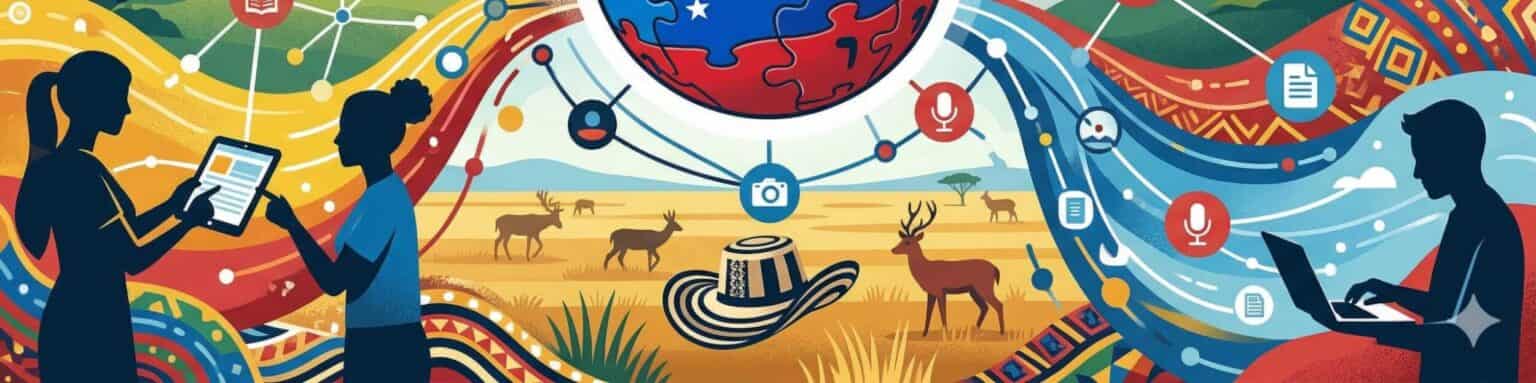
Education has always been the cornerstone of human progress — but for most of history, access to quality learning materials has been determined by wealth, geography, and institutional privilege. Open Educational Resources (OER) are dismantling those barriers with remarkable speed, reshaping how students learn, how teachers teach, and how institutions think about the future of knowledge. From a rural classroom in sub-Saharan Africa to a university lecture hall in Berlin, OER are quietly engineering one of the most significant revolutions in the history of education.
What Are Open Educational Resources?
Open Educational Resources are teaching, learning, and research materials that are freely available for anyone to use, adapt, and redistribute. The term was first coined at a UNESCO forum in 2002 and has since evolved into a global movement encompassing millions of textbooks, courses, videos, lesson plans, assessments, and interactive tools — all released under open licenses like Creative Commons.
The defining characteristic of OER is not just that they are free of cost, but that they grant users four fundamental freedoms:
- Retain: The right to make, own, and control copies of the content.
- Reuse: The right to use the content in any way you choose — in class, in a study group, on a website.
- Revise: The right to adapt, adjust, modify, or alter the content to meet your needs.
- Redistribute: The right to share copies of the original or revised content with others.
These freedoms — collectively known as the 5R Framework (the fifth R being “Remix”) — transform educational materials from static, proprietary products into living, evolving resources that communities can continuously improve and localize for their specific contexts.
A Brief History of OER
The OER movement emerged from the broader open-source software philosophy of the 1990s, which demonstrated that collaborative, openly licensed creation could produce tools of extraordinary quality and reliability. When MIT launched its OpenCourseWare initiative in 2001 — publishing course materials from all of its academic programs freely online — it signaled that even the world’s most prestigious academic institutions saw value in openness over exclusivity.
The movement accelerated dramatically with the rise of broadband internet, affordable smartphones, and cloud storage, which made distributing large libraries of digital content feasible at near-zero marginal cost. Today, platforms like Khan Academy, Coursera (for auditing), edX, MIT OpenCourseWare, OpenStax, and OER Commons collectively serve hundreds of millions of learners across every continent. UNESCO’s 2019 Recommendation on OER, adopted by 193 member states, marked a watershed moment — the international community formally recognizing OER as a strategic priority for achieving the Sustainable Development Goal of quality education for all (SDG 4).
Breaking the Textbook Cost Crisis
One of the most immediate and concrete impacts of OER has been in addressing the textbook affordability crisis, particularly at the university level. In the United States alone, the average college student spends over $1,200 per year on textbooks — a cost that has risen more than 1,000% since 1977, far outpacing inflation. Many students simply go without required textbooks, directly harming their academic performance and course completion rates.
OER textbooks — such as those produced and distributed by OpenStax, a nonprofit based at Rice University — offer peer-reviewed, professionally designed alternatives at zero cost. OpenStax alone has saved students an estimated $1.8 billion in textbook costs, with over 6 million students using its materials across thousands of institutions. These are not compromised, second-rate alternatives: OpenStax titles undergo rigorous peer review and are used at institutions ranging from community colleges to research universities.
The financial liberation OER provides is not merely about convenience. For low-income students, the difference between a $200 textbook and a free one can determine whether they stay enrolled, eat adequately, or take on additional debt. OER, in this sense, is a direct intervention against educational inequality.
Empowering Teachers and Educators
OER’s transformative power is not limited to students. Teachers and educators at every level are using open resources to fundamentally reimagine their pedagogical practice. Traditional textbooks lock educators into a fixed curriculum designed for a generic audience — one that rarely matches the specific cultural context, language, or learning needs of a particular classroom.
OER gives teachers the freedom to remix and localize materials, combining the best elements from multiple sources to create a curriculum that is precisely tailored to their students. A history teacher in Mexico can take an open-licensed world history textbook, add locally relevant content about pre-Columbian civilizations, translate passages into indigenous languages, and redistribute the result to colleagues across the country — all without legal restriction.
This creative freedom is professionallly empowering. Research consistently shows that when teachers are active co-creators of curriculum rather than passive consumers of publisher-mandated materials, they experience greater job satisfaction, deeper content mastery, and more innovative instructional approaches. OER effectively turns every educator into a curriculum designer with global reach.
Transforming Higher Education
In higher education, OER are not only reducing costs — they are challenging the fundamental business model of academic publishing and forcing universities to reconsider what quality and prestige truly mean.
The traditional academic publishing system has long been criticized as deeply dysfunctional: researchers produce knowledge, typically funded by public grants; they submit it to journals; journals charge universities enormous subscription fees to access that same publicly funded research. This circular, expensive system locks knowledge behind paywalls and channels public resources into private publishing profits.
Open Access journals and OER represent a structural alternative. Institutions like Harvard, MIT, and the University of California system have adopted open access policies requiring that faculty research be made freely available. The European Commission has pushed for open access as a condition of public research funding. Increasingly, open access is becoming the norm rather than the exception in academic publishing — a shift with profound implications for how knowledge circulates globally.
Beyond research publishing, universities are experimenting with fully OER-based degree programs — sometimes called “zero-textbook-cost” (ZTC) degrees — where students complete an entire credential without purchasing a single commercial textbook. These programs dramatically reduce the total cost of a degree and disproportionately benefit first-generation college students and those from lower-income backgrounds.
OER and Technology: A Powerful Combination
The intersection of OER with emerging educational technologies is creating learning experiences that would have been unimaginable a generation ago. Artificial intelligence tools can now personalize OER content dynamically — adapting the difficulty, pacing, and presentation of open materials to the individual learner’s needs in real time. This combination of openness and adaptivity holds the promise of truly individualized learning at global scale.
Learning Management Systems (LMS) like Moodle — itself open-source — integrate seamlessly with OER repositories, allowing teachers to build entire courses from openly licensed content without licensing fees or vendor lock-in. The alignment of open educational content with open educational technology creates a virtuous cycle of innovation and accessibility.
Mobile technology is extending OER’s reach into areas with limited internet connectivity. Apps designed for low-bandwidth environments allow learners to download entire curricula for offline use — meaning a student in a remote village without a reliable internet connection can still access the same high-quality instructional materials as a student in a major metropolitan university.
Quality, Sustainability, and Misconceptions
A common misconception about OER is that “free” means “low quality.” This conflation of price with value is a legacy of commercial publishing’s marketing narratives, not an empirical reality. Research comparing OER with commercial textbooks consistently finds equivalent or superior learning outcomes for students using open materials. A landmark study by the University of Georgia found that students using OER textbooks performed at least as well academically as those using commercial alternatives — while being significantly more likely to complete their courses.
Sustainability is a more legitimate concern. Creating high-quality OER requires time, expertise, and financial resources — even if the final product is freely distributed. Successful OER initiatives have addressed this through several models: institutional funding (as with MIT OpenCourseWare), philanthropic support (as with Khan Academy), government grants (as with many national OER programs), and community volunteerism (as with Wikipedia and Wikimedia projects).
The key insight is that the cost of OER is a one-time creation cost rather than a perpetual consumption cost — once a high-quality open textbook exists, it can be used by millions of learners indefinitely at zero marginal cost. This economics of abundance, rather than scarcity, is precisely what makes OER so transformative in the long run.
Global Equity and the SDG 4 Connection
Perhaps the most profound dimension of OER’s transformative impact is its role in advancing global educational equity. The United Nations’ Sustainable Development Goal 4 calls for inclusive, equitable quality education for all by 2030 — an ambition that is simply impossible to achieve through commercial educational content alone.
In developing countries, where national education budgets are severely constrained, OER represent a way to deliver world-class instructional materials without the recurring costs of commercial licensing. Governments can invest in device infrastructure, teacher training, and connectivity while relying on freely available content to fill curriculum needs. This strategic reallocation of limited resources can dramatically accelerate progress toward universal quality education.
UNESCO’s global OER network actively supports developing nations in building OER policies, repositories, and communities of practice — recognizing that the free flow of educational knowledge across national borders is essential to closing the global learning gap.
The Future Belongs to Openness
The trajectory of Open Educational Resources points toward a future where quality education is no longer gated by financial capacity. As AI-powered personalization, mobile technology, and open licensing converge, OER will continue evolving from static digital textbooks into dynamic, intelligent, community-curated learning environments that adapt to every learner’s context and need.
The institutions, governments, and educators that embrace this transformation early will build more resilient, equitable, and innovative learning ecosystems. Those that cling to closed, proprietary models will find themselves increasingly out of step with both the ethical imperatives and the practical realities of 21st-century education.
Open Educational Resources are not simply a cost-cutting measure or a technological novelty. They represent a fundamental reimagining of who knowledge belongs to — and a commitment to the revolutionary idea that every human being, regardless of where they were born or how much money their family has, deserves access to the full wealth of human learning. That is not just good education policy. That is the foundation of a just world.