Today’s world runs on information. Every major decision—whether in politics, business, education, or daily life—is shaped by the quality, speed, and accessibility of what we know. Yet, despite the explosion of data and connectivity, millions of people still lack reliable access to trustworthy knowledge. In this context, the idea of free knowledge is no longer just a noble ideal; it has become a necessity for progress, equity, and democracy.
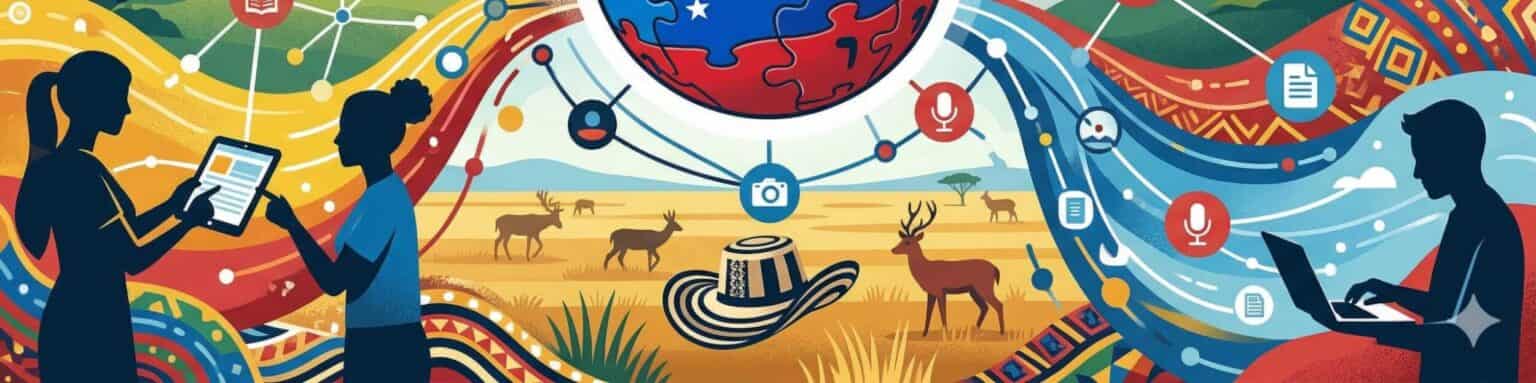
Free knowledge refers to information that anyone can freely access, use, share, and even adapt, without financial, legal, technical, or social barriers. Platforms like Wikipedia, open‑source software projects, open‑access academic journals, and Creative Commons‑licensed materials exemplify this movement. As algorithms shape our news feeds and surveillance capitalism profits from our attention, making knowledge truly free matters more than ever.
The Digital Divide in the Age of Information
On the surface, the internet promised universal access. Anyone with a smartphone could, in theory, learn anything. But this promise has not been fulfilled equally. A digital divide still separates those who can easily reach reliable information from those who cannot.
In low‑income countries and rural regions, high data costs, poor connectivity, outdated devices, and limited digital literacy severely restrict access. Even in rich nations, economic inequality, language barriers, and platform gatekeeping create knowledge gaps. When high‑quality information is locked behind paywalls or complex technical systems, it reinforces existing power imbalances.
Free knowledge directly challenges this hierarchy. Open educational resources, collaborative encyclopedias, and community‑built documentation help level the playing field. A student in a remote village can study the same course material as a university student in a major city. A small‑business owner can learn marketing strategies without paying for expensive courses. In this way, free knowledge becomes a tool for social mobility and economic inclusion.
Free Knowledge and the Crisis of Misinformation
We live in the age of misinformation. Social media algorithms optimize for engagement, not truth. Deepfakes, conspiracy theories, and polarized content spread faster than carefully researched facts. In such an environment, access to reliable information is not just a convenience—it is a public good.
Free knowledge platforms help counter this crisis in two key ways. First, open‑source encyclopedias and fact‑checking initiatives provide transparent, verifiable sources that show how information is gathered and edited. The public can see the sources, debate quality, and correct errors. This transparency builds trust in ways that opaque, closed systems cannot.
Second, when knowledge is freely available, more people can become producers and not just consumers. Open‑source communities, citizen science projects, and open‑data platforms allow ordinary users to contribute observations, analyze data, and develop tools. This collaborative model of knowledge production strengthens collective resilience against misinformation.
Education and the Democratization of Learning
Education is one of the clearest areas where free knowledge makes a tangible difference. Traditional education systems are often expensive, exclusionary, and rigid. University tuition, textbook costs, and licensing fees create barriers that keep many out of the learning ecosystem.
Open Educational Resources (OER) dismantle some of these barriers. Governments, universities, and nonprofits increasingly publish free textbooks, video lectures, and interactive modules under open licenses. In countries with limited educational infrastructure, these materials can reach millions of students who would otherwise have little access to high‑quality learning content.
Moreover, free knowledge supports lifelong learning, which is essential in a rapidly changing job market. As automation and artificial intelligence disrupt industries, workers need to reskill constantly. Free online courses, open‑source coding tutorials, and community‑driven documentation allow people to adapt without relying on expensive training programs. In this sense, free knowledge becomes a safety net for economic survival in the future of work.
Innovation, Open Source, and the Power of Collaboration
Innovation no longer belongs only to big corporations or elite research labs. The rise of open‑source software shows how free knowledge can accelerate progress. Linux, Python, Kubernetes, and countless other technologies power much of the modern digital world—all built collaboratively and shared openly.
When code, designs, and research are freely available, it reduces duplication of effort and speeds up development. Developers can build on each other’s work, fix bugs collectively, and adapt tools to local needs. This collaborative model has proven especially powerful in fields like healthcare, where open‑source ventilators or epidemiological models can be shared and improved globally during crises.
Beyond software, open‑source hardware, open‑access scientific journals, and open research datasets also illustrate how free knowledge drives innovation. When scientists share data and methods openly, it becomes easier to replicate results, detect errors, and build on discoveries. This transparency not only speeds up scientific progress but also strengthens public trust in science.
Democracy, Civic Participation, and Accountability
Free knowledge is also a cornerstone of healthy democracies. Citizens need accurate, timely information to make informed choices about elections, policies, and public budgets. When governments and institutions hide information behind secrecy laws or expensive databases, they weaken democratic accountability.
Open‑government data initiatives are one response to this problem. Municipalities and national agencies that publish budgets, contracts, crime statistics, and environmental data in open formats empower journalists, researchers, and activists to scrutinize and hold power to account. Wikis, open‑source databases, and collaborative mapping tools allow communities to document local issues, from infrastructure problems to human‑rights violations.
Furthermore, free knowledge supports media literacy. When people can access diverse, transparent sources of information, they become better equipped to evaluate claims and distinguish credible reporting from propaganda. This skill is increasingly critical in an age where misinformation campaigns can sway elections and destabilize societies.
Global Challenges and the Role of Shared Knowledge
The world faces enormous shared challenges: climate change, pandemics, inequality, and geopolitical instability. No single country or corporation can solve these problems alone. They require global cooperation and the sharing of knowledge.
In public health, open‑access scientific research has dramatically accelerated responses to crises. During the COVID‑19 pandemic, researchers shared viral genome sequences, clinical trial data, and epidemiological models openly. This rapid exchange of information helped governments, doctors, and vaccine developers respond faster than in previous outbreaks.
Similarly, climate science and environmental monitoring depend on open data and open‑source tools. Weather models, satellite imagery, and climate simulations are most effective when shared across borders and sectors. Farmers can use this data to adapt to changing weather patterns; cities can plan infrastructure to withstand extreme events; and policymakers can design evidence‑based climate strategies.
In these global contexts, free knowledge becomes a form of international solidarity. It recognizes that challenges like disease and climate change do not respect borders and that solutions must be collectively developed and freely shared.
Cultural Diversity and the Preservation of Knowledge
Knowledge is not only scientific or technical; it also includes languages, histories, traditions, and local wisdom. Indigenous communities, marginalized groups, and small language speakers often preserve valuable cultural knowledge that is at risk of being lost.
Free knowledge platforms can help preserve and promote this diversity. Wikimedia projects, for example, host content in hundreds of languages, including many that are underrepresented online. Community‑driven archives, open‑source language tools, and digital libraries allow cultural heritage to be documented and shared globally.
Importantly, free knowledge also challenges the dominance of a few global languages and centralized platforms. When local communities can create and share content in their own languages, they retain control over their narratives. This empowerment is crucial for resisting cultural homogenization and ensuring that knowledge reflects the diversity of human experience.
The Business Case for Free Knowledge
Despite its social benefits, free knowledge is sometimes seen as a threat to traditional business models. Paywalls, proprietary software, and exclusive content have long been profitable. However, even in the private sector, many companies are finding that openness can be a competitive advantage.
Open‑source software, for instance, has become a strategic asset for tech giants and startups alike. Companies contribute to open‑source projects to build ecosystems, attract talent, and reduce development costs. By sharing code freely, they can accelerate innovation and benefit from community contributions.
Similarly, businesses that publish open datasets, research, or educational materials often gain reputation, trust, and customer loyalty. In the long run, free knowledge can create more value than it “loses” by fostering innovation, expanding markets, and building stronger relationships with users.
Threats to Free Knowledge and How to Protect It
Despite its importance, free knowledge faces serious threats. Censorship, surveillance, copyright overreach, algorithmic exclusion, and the commercialization of platforms all put pressure on open systems. Some governments restrict access to knowledge platforms or criminalize the sharing of certain information. Corporations may limit access through proprietary algorithms or license restrictions.
Protecting free knowledge requires sustained collective action. This includes:
- Stronger legal protections for fair use, open licenses, and public‑domain content.
- Investment in open‑access research and public‑interest platforms.
- Support for digital literacy and community‑driven projects.
- Ethical design of algorithms that prioritize accuracy and transparency over engagement.
Policy makers, educators, technologists, and citizens all have roles to play. The goal is to build an ecosystem where knowledge is not treated as a commodity to be hoarded, but as a commons to be stewarded collectively.
The Future of Free Knowledge
Looking ahead, the importance of free knowledge will only grow. Artificial intelligence, big data, and immersive technologies will reshape how we access and interact with information. If these tools are controlled by a few powerful actors, they risk deepening existing inequalities and intensifying surveillance. If they are built on open, transparent, and inclusive foundations, they can expand access and empower communities.
The future of free knowledge will depend on choices we make today. Will we allow more paywalls and data silos, or will we invest in open platforms, open education, and open science? Will algorithms optimize for profit and control, or for transparency and public benefit?