
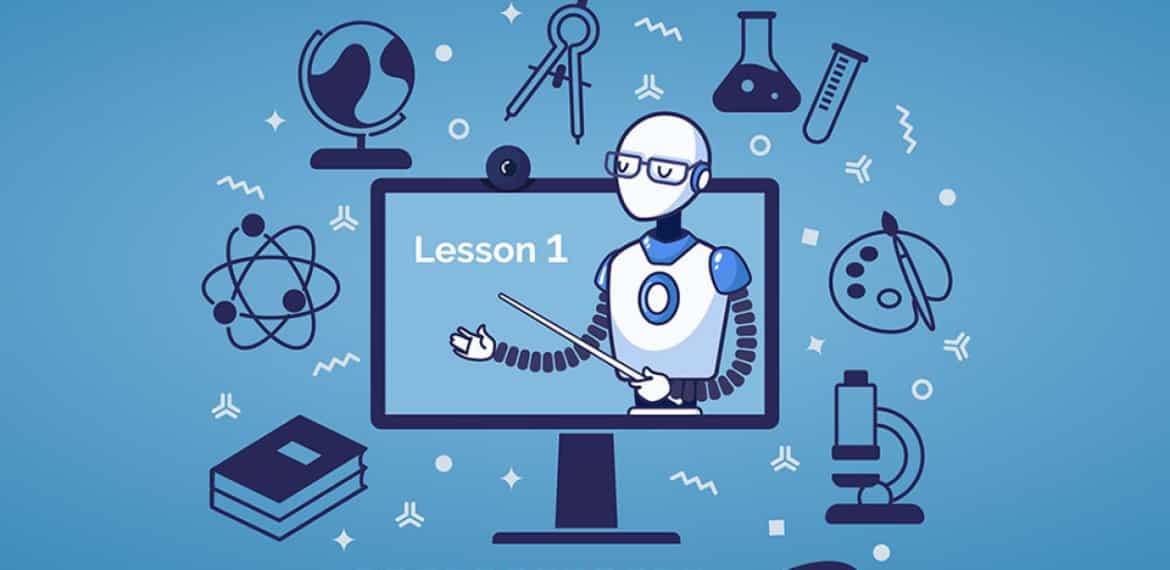
Education stands at a historic inflection point. For centuries, the fundamental architecture of formal learning has remained largely unchanged — a teacher, a classroom, a curriculum, and students of varying abilities all moving through the same material at the same pace. Artificial Intelligence is dismantling this model with extraordinary speed, replacing it with something far more dynamic, responsive, and equitable. The benefits of AI in education are not theoretical projections for some distant future. They are measurable, documented, and already transforming classrooms, universities, and self-directed learning environments around the world. From personalized tutoring and intelligent assessment to administrative automation and global access, AI is not just improving education — it is fundamentally reimagining what education can be.
Personalized Learning for Every Student
The most celebrated and impactful benefit of AI in education is its ability to deliver genuinely personalized learning at scale — something that has been an educational ideal for decades but was practically impossible to implement in traditional classroom settings. Every student learns differently: at different speeds, through different modalities, with different prior knowledge and different gaps in understanding. A single teacher managing 30 students simultaneously cannot possibly tailor instruction to each individual learner’s needs in real time. AI can.
AI-powered adaptive learning platforms continuously assess each student’s performance, identify precisely where understanding breaks down, and dynamically adjust the content, difficulty, pacing, and instructional format to match each learner’s current level. A student who masters a concept quickly is immediately presented with more challenging material; a student who is struggling receives alternative explanations, worked examples, and targeted practice until mastery is achieved before progression.
Platforms like Khan Academy, Carnegie Learning, Knewton, and DreamBox have demonstrated measurable learning gains through AI-driven personalization — gains that are particularly significant for students at the extremes of the performance distribution, who are most poorly served by one-size-fits-all instruction. Research from the Bill & Melinda Gates Foundation and multiple independent studies confirms that adaptive AI learning systems consistently outperform traditional instruction on standardized learning measures, particularly in mathematics and language acquisition.
The democratizing implication of this benefit cannot be overstated. Personalized instruction has historically been a privilege of the wealthy — the province of private tutors, elite small-group instruction, and expensive test preparation courses. AI makes personalized learning available to any student with a connected device, regardless of family income, geographic location, or institutional resources.
Intelligent Tutoring Systems
Closely related to personalized learning is the emergence of Intelligent Tutoring Systems (ITS) — AI-powered platforms that simulate the experience of working one-on-one with a knowledgeable human tutor. Unlike static learning software that simply presents content, ITS engage students in active dialogue, respond to their specific answers and misconceptions, ask probing questions, provide targeted feedback, and adjust their instructional approach based on the student’s responses.
Modern ITS powered by large language models have reached levels of conversational sophistication that were impossible just a few years ago. Khan Academy’s Khanmigo tutor, for instance, uses Socratic questioning to guide students toward understanding rather than simply providing answers — mirroring the pedagogical approach of the most effective human tutors. Students can ask questions in natural language, receive explanations tailored to their level, and engage in extended problem-solving dialogue that closely resembles working with a patient, knowledgeable human expert.
The educational research on ITS is among the most consistently positive in all of educational technology. Meta-analyses covering decades of ITS research find that students using intelligent tutoring systems learn material in approximately 30% less time than students receiving conventional classroom instruction, while achieving equal or superior mastery. For subjects like mathematics, physics, and computer programming — where step-by-step procedural understanding is essential and common misconceptions are well-documented — ITS have proven especially powerful.
Automated Assessment and Intelligent Feedback
Assessment is one of the most time-intensive and cognitively demanding aspects of teaching. Grading essays, providing written feedback, evaluating problem-solving processes, tracking individual progress, and identifying patterns of misunderstanding across a class can consume the majority of a teacher’s working hours outside the classroom. AI is transforming assessment by automating many of these tasks while simultaneously improving the quality and timeliness of feedback.
AI-powered automated essay scoring systems can evaluate written work for grammar, coherence, argument structure, evidence use, and stylistic quality — providing students with detailed, specific feedback within seconds of submission rather than days or weeks later. Research has consistently found that immediate feedback dramatically accelerates learning compared to delayed feedback, because students can make corrections while the thinking process is still active in working memory.
Beyond writing assessment, AI analytics platforms monitor patterns across all of a student’s interactions with educational software — identifying not just whether answers are correct but how students approach problems, where they hesitate, which steps they skip, and what systematic errors they consistently make. This granular behavioral data enables a depth of diagnostic insight that no human assessor could replicate through conventional testing, revealing the cognitive processes behind performance in ways that genuinely inform targeted instruction.
Early Identification of At-Risk Students
One of AI’s most potentially life-changing benefits in education is its ability to identify students at risk of academic failure, dropout, or mental health crisis before those outcomes occur — early enough for intervention to make a difference. Traditional early warning systems rely on teachers noticing behavioral changes or checking grade reports periodically — processes that are subjective, inconsistent, and chronically late.
AI early warning systems continuously analyze dozens of behavioral and performance indicators: attendance patterns, assignment submission rates, grade trajectories, engagement with digital learning platforms, and even linguistic patterns in student communications that research associates with stress, disengagement, or depression. By integrating these signals and comparing them against historical patterns of students who subsequently struggled or dropped out, AI systems can alert teachers and counselors to at-risk students weeks or months earlier than conventional monitoring would detect them.
Community colleges and universities that have implemented AI early warning systems — including Georgia State University, whose AI advising system has been extensively studied — have documented significant reductions in dropout rates, particularly among first-generation college students and those from low-income backgrounds who historically lack the social capital to seek help proactively. The AI does not replace human counselors and advisors — it directs their attention and resources to the students who most urgently need them.
Empowering Teachers Through Automation
A persistent misconception about AI in education is that it threatens teachers’ roles. The evidence and the vision of serious education researchers consistently point in the opposite direction: AI’s greatest benefit to teachers is liberation from administrative burden, freeing them to focus on the irreplaceable human dimensions of education that no algorithm can replicate.
The administrative load carried by teachers is enormous and largely invisible to the public. Beyond classroom instruction, teachers spend hours each week on grading, progress report writing, lesson plan preparation, differentiation for diverse learners, parent communication, attendance tracking, and compliance documentation. AI tools can automate or substantially assist with all of these tasks — generating differentiated reading materials, drafting progress report language, creating quiz questions aligned to learning objectives, and flagging administrative deadlines.
When teachers are freed from routine cognitive labor, they can invest more deeply in relationship-building with students, facilitating complex discussions, providing emotional support, designing authentic project-based learning experiences, and exercising the nuanced professional judgment that defines truly excellent teaching. AI does not make teachers less important — it makes the uniquely human aspects of teaching more prominent and more impactful by removing the noise of administrative routine.
Breaking Language and Accessibility Barriers
AI is dismantling barriers to education that have historically excluded millions of learners. Real-time AI translation enables students to access educational content in their native language regardless of what language it was originally produced in — dramatically expanding the reach of high-quality educational resources to non-English speakers worldwide. AI-powered translation tools have reached levels of accuracy in major world languages that make real-time multilingual instruction genuinely feasible.
For students with disabilities, AI-powered accessibility tools are transforming educational participation. Automatic speech recognition enables students with physical disabilities to complete written assignments by voice. AI-powered captioning and transcription make audio and video content accessible to deaf and hard-of-hearing students in real time. Text-to-speech tools with natural-sounding AI voices make written content accessible to visually impaired students and those with dyslexia. Computer vision tools can describe visual content for blind users, making image-heavy educational materials accessible for the first time.
These accessibility benefits represent a profound equity dividend from AI investment in education — ensuring that the educational benefits of AI reach students who were previously among the most excluded from quality learning opportunities.
Supporting Special Education and Diverse Learning Needs
Students with learning differences — including dyslexia, ADHD, autism spectrum disorder, dyscalculia, and language processing disorders — have historically been among the most underserved by traditional educational systems designed for neurotypical learners. AI is opening new possibilities for genuinely inclusive education that meets diverse cognitive and sensory needs without requiring constant one-on-one specialist attention.
AI-powered learning platforms can adapt not just content difficulty but presentation format — converting text to audio, simplifying language complexity, breaking multi-step tasks into smaller components, providing visual representations of abstract concepts, and adjusting sensory stimulation levels — based on each student’s documented needs and real-time behavioral signals. For students with ADHD, AI platforms can optimize the timing and length of learning sessions to match attention span research. For students with dyslexia, AI can automatically apply font, spacing, and color adjustments known to improve reading accessibility.
Special education teachers — who are in chronic shortage in most countries — can leverage AI tools to manage the complex documentation, individualized education plan (IEP) development, and progress monitoring requirements of special education without being consumed by paperwork, preserving their professional energy for direct student support.
Expanding Access to Quality Education Globally
Perhaps the most transformative long-term benefit of AI in education is its potential to extend quality learning opportunities to the billions of people who currently lack access to adequately resourced schools, qualified teachers, and up-to-date educational materials. This is not a marginal benefit for a small population — it is a potential civilizational transformation.
In sub-Saharan Africa, South Asia, and rural Latin America, teacher shortages are severe, school infrastructure is often inadequate, and curricula are frequently outdated. AI-powered educational platforms can partially compensate for these deficits — providing structured, adaptive, curriculum-aligned instruction through affordable mobile devices even in areas with limited connectivity. AI tools designed for low-bandwidth environments and local languages are expanding their reach into communities that have been excluded from the benefits of global educational investment.
The economic implications are staggering. Research by the McKinsey Global Institute consistently finds that improving educational outcomes in developing countries is among the highest-return investments available to the global economy — generating returns in productivity, health, governance, and innovation that dwarf the cost of educational investment. AI accelerates this return by making quality education exponentially more scalable and affordable than any previous model.
Preparing Students for an AI-Driven World
Beyond its direct instructional benefits, AI in education serves a crucial workforce preparation function. The World Economic Forum projects that AI and automation will transform the majority of existing jobs within the next decade, displacing routine cognitive work while creating demand for skills in human-AI collaboration, creative problem-solving, data literacy, and ethical reasoning.
Educational systems that integrate AI tools prepare students not just for better learning outcomes today, but for productive engagement with AI-saturated professional environments tomorrow. Students who learn alongside AI tutors, collaborate with AI writing assistants, use AI data analysis tools in science projects, and study how AI systems make decisions develop an AI fluency that will be as essential to 21st-century professional life as computer literacy was to the late 20th century.
A Foundation for Lifelong Learning
The benefits of AI in education extend beyond formal schooling into the full arc of human learning. AI-powered platforms support lifelong learning — enabling working professionals to upskill and reskill efficiently, enabling retirees to pursue intellectual interests, enabling anyone at any stage of life to access structured, personalized, high-quality educational experiences whenever and wherever they choose.
This democratization of lifelong learning has profound implications for economic resilience, personal fulfillment, and social cohesion. A world in which anyone can access a world-class personalized education at any age — in any language, at any pace, on any device — is a world with fundamentally greater human potential, greater equity of opportunity, and greater capacity to meet the complex challenges ahead.
Artificial Intelligence is not the solution to every challenge in education. It cannot replace the irreplaceable human elements of great teaching — inspiration, empathy, wisdom, and genuine relationship. But as a tool for extending access, personalizing instruction, reducing burden on educators, and preparing learners for a rapidly changing world, AI offers benefits to education that are both extraordinary in scale and urgent in their importance. The question is no longer whether AI belongs in education. It is how quickly and equitably we can bring its benefits to every learner on Earth.